A guide to an efficient standard of commercial cleaning
How much work can a cleaner get done in 3 hours?
Commercial cleaning is essential when it comes to making sure your premises are safe and hygienic. Whether the premises be a small office or a large corporate building. Cleaning will impact not only the aesthetics of the space but also the wellbeing of employees, clients and visitors. The role of a commercial cleaner is vital in achieving and maintaining good cleaning standards.
In this blog we will look at what type of cleaning tasks that are important and how cleaners will maximise their efficiency.
The Specifics of Commercial Cleaning:
Before we investigate the specifics it’s important that we understand the range of commercial cleaning. Commercial cleaners are responsible for a wide range of duties from daily surface cleaning to deep cleaning jobs.
The level of cleaning varies based on the type of building, the type of cleaning required and the size of the area. Common sectors that look for commercial cleaning include offices, healthcare facilities, schools, retail and industrial environments.
What can be done in 3 hours:
Depending on the size of the space and the area a cleaner working alone in a tiny office will have a different workload compared to a team of cleaners who clean a premises twice the size of a small office.
However, we can break down the key cleaning tasks that can be accomplished in a 3-hour timeframe, assuming the premises is a medium sized office or commercial building.
1. Emptying bins and replacing bin bags
The first task any cleaner will tackleis emptying the bins and replacing the bags. This job is very crucial for maintaining hygiene and ensuring that the rubbish doesn’t overflow. Whilst this may seem like a quick task, it can take time depending on the number of bins and the type of waste that is in the bins.
You could expect to see a cleaner spending around 15-30 minutes emptying all the bins across the space especially if there are numerous offices, communal rooms or meeting rooms to address.
2. Wiping and Dusting the Surfaces
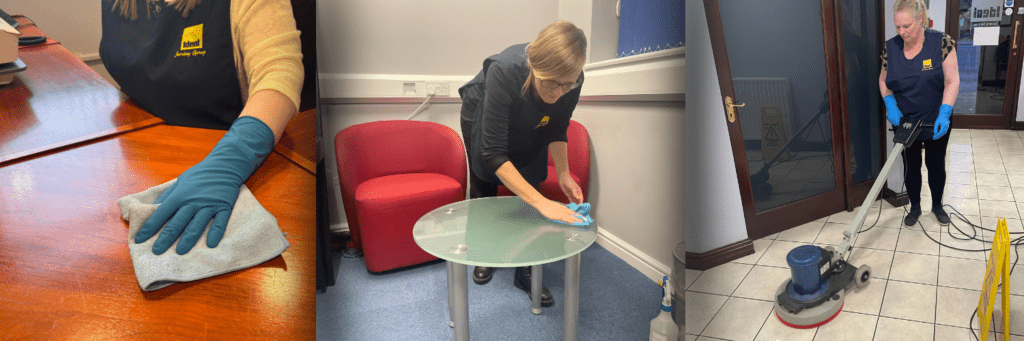
Dusting is probably one of the most basic cleaning tasks. It may be basic; however, it is an essential task in commercial cleaning. A cleaner will typically wipe down desks, tables, shelves and other flat surfaces where dust can form.
Areas that are frequently touched such as light switches, handrails and door handles will also be cleaned to minimise the spread of germs.
In a standard office this could probably take a cleaner around 30-40 minutes depending on how many surfaces need attention and whether the space is well maintained or requires more intensive cleaning.
3. Vacuuming Carpets and Mopping Floors
Making sure the floor is kept clean is an important aspect of maintaining a hygienic commercial environment. In many offices, areas with carpets that get used a lot tend to need regular vacuuming to remove dirt, dust, and allergens that can accumulate.
Hard floor mopping is required to ensure they are kept clean and free from stains and spills.
If a cleaner has a 3-hour window, a cleaner can vacuum a large area of carpeted space, mop several rooms including kitchens, hallways and restrooms and still have time to do some other cleaning.
The time needed for this cleaning task can vary from floor type to size of the area but typically it can take about 45-60 minutes.
4. Cleaning and disinfecting toilets
One of the most critical areas in any building which require regular cleaning are toilets . Toilets must be sanitised properly to prevent the spread of bacteria and germs helping to ensure a healthy environment for employees and visitors. A cleaner will typically focus on cleaning and disinfecting the toilets, sinks, mirrors and other surfaces in the restroom. Floors will be mopped and any debris or dust that is found in the corners will be removed.
A cleaner can be expected to spend around 30-40 minutes cleaning toilets depending on the number of toilets in the building. This includes wiping down the counter tops ensuring that soap and paper products are replenished and thoroughly disinfecting surfaces.
How cleaners ensure a good standard of cleaning in 3 hours.
For a cleaner to ensure that they make the most of their 3-hour window, cleaners will tend to follow strategies such as:
- Prioritisation: cleaners tend to begin with the most important tasks, such as emptying trash bins and sanitising highly touched areas. They then move on to less critical areas like dusting or window cleaning.
- Cleaning equipment: Cleaners use equipment such as vacuums, mops and microfibre cloths. Allowing cleaners to have the right tools on hand, helps to ensure that tasks are completed faster and more thoroughly.
- Working through a system: Cleaners will tend to have a system on how they clean to help avoid time wasted moving back and forth across the building. For example, cleaners might start from the furthest point of the building and work their way back to the entrance making sure that everything is cleaned to a good enough standard.
- Teamwork: If the cleaning is conducted by a team of cleaners, the cleaning will be divided between the team. This way multiple tasks can be completed, achieving the result in a short amount of time.
Conclusion:
So, to conclude. A cleaner can achieve a significant amount of work in 3 hours. From emptying rubbish and dusting surfaces to sanitising high touched areas, every task a cleaner carries out helps to create a healthier and more professional environment, with the right approach a cleaner can ensure that the space remains spotless organised and welcoming
Whether you’re a small company, a large company or a medical facility, investing some money into a cleaning contract will help your workspace remain safe, productive, and pleasant for everyone not just you. The importance of a clean environment cannot be over emphasised. After reading this blog you will be able to understand that in just 3 hours a cleaner can achieve a lot to maintain a healthy working environment.